Every credit card comes with a credit limit, the maximum balance you’re allowed to carry on the account at any given time. While the concept sounds simple, a lot of confusion tends to build up around how that number is actually determined, how it can change over time, and how it connects to your credit score. Understanding the mechanics behind your credit limit can help you use your card more strategically, avoid unnecessary fees, and make more informed decisions about requesting a higher limit.
This guide explains exactly how credit card limits work, what factors influence them, and how to manage your limit in a way that supports your overall financial health.
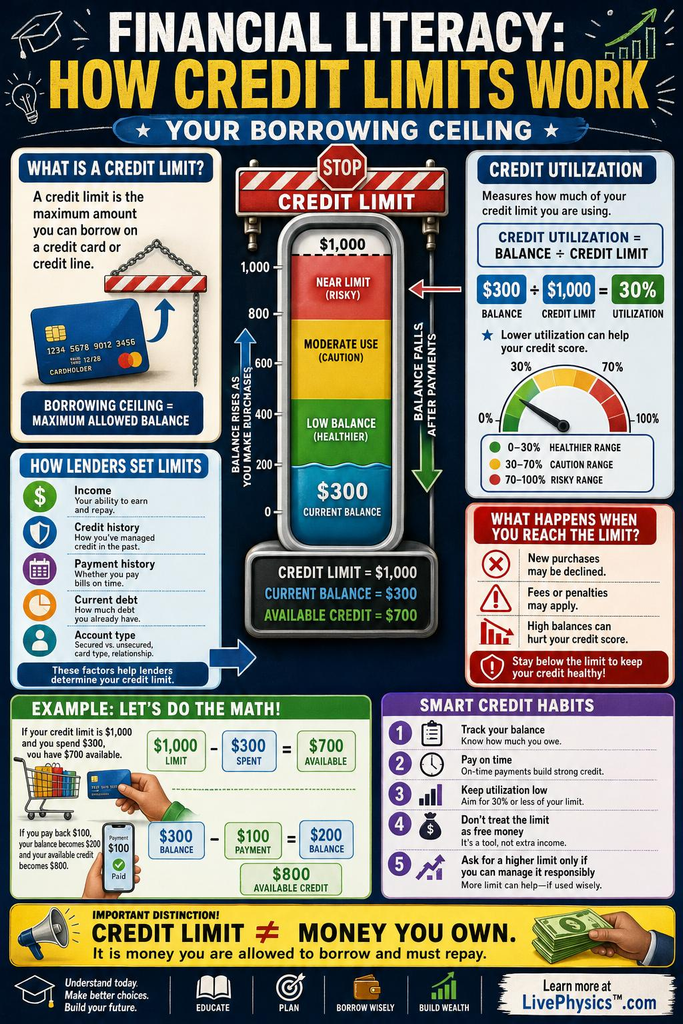
What a Credit Limit Actually Is
A credit limit is the maximum amount of credit a card issuer extends to you on a specific account. It represents the total balance you’re allowed to carry, combining purchases, cash advances, balance transfers, and any accrued interest or fees, before the issuer restricts further transactions or takes other action.
It’s important to understand that your credit limit isn’t the same as a target spending amount. It’s simply the ceiling the issuer has set based on your creditworthiness at the time of approval (and periodically afterward). Many financial experts recommend using only a modest portion of your available limit, even if you plan to pay your balance in full every month, for reasons explained later in this guide.
How Issuers Determine Your Initial Credit Limit
When you apply for a credit card, the issuer evaluates several factors to determine both whether to approve you and, if approved, what credit limit to assign. Common factors include:
Credit score and credit history. A longer history of on-time payments and responsible credit use generally supports a higher limit.
Income. Issuers typically ask for your annual income during the application process, since it helps them assess your capacity to repay a given amount of credit.
Existing debt obligations. Issuers often consider your current debt levels relative to your income, sometimes referred to as a debt-to-income consideration, when determining how much additional credit to extend.
Relationship with the issuer. If you already have an account with the same bank or issuer, they may factor in that existing relationship and history when setting your limit on a new card.
The specific card product. Different cards, even from the same issuer, often have different typical limit ranges. Premium or higher-tier cards, for example, often start with higher limits than entry-level or secured cards.
Because these factors vary by applicant, two people applying for the exact same card can receive very different credit limits based on their individual financial profiles.
Why Credit Limits Vary So Widely
It’s common to hear that a friend or family member was approved for a much higher limit on the same card you have, and this is entirely normal. Since limits are calculated individually based on your credit profile and income at the time of application, there’s no single fixed limit for any given card product. This is also why comparing your own limit to someone else’s isn’t a particularly useful exercise, your assigned limit reflects your specific financial situation, not a fixed standard for the card itself.
How Credit Utilization Connects to Your Limit
One of the most important reasons to understand your credit limit is its direct connection to a concept called credit utilization, the percentage of your available credit that you’re currently using. This is calculated by dividing your current balance by your total credit limit.
For example, if your credit limit is $5,000 and your current balance is $1,500, your utilization on that card is 30%.
Credit utilization is one of the more heavily weighted factors in most credit scoring models, generally second only to payment history in terms of overall impact. Lower utilization is typically viewed favorably, and many financial experts suggest keeping utilization below 30% of your total available credit, with even lower levels often viewed even more favorably.
This is true even if you pay your balance in full every month, since the balance reported to the credit bureaus is often based on your statement balance at a specific point in the billing cycle, not necessarily a $0 balance, unless your statement happens to close after you’ve already paid it down.
Per-Card vs. Overall Utilization
It’s worth understanding that utilization is generally considered both per individual card and across all your revolving credit accounts combined. This means a very high balance on one card, even if your other cards have low balances, can still affect your utilization ratio and, in turn, your credit score. Spreading balances across multiple cards, when possible, or paying down a high balance on a single card, can help manage this.
Can Your Credit Limit Change Over Time?
Yes, and there are a few different ways this can happen.
Automatic Increases
Some issuers periodically review your account and may increase your limit automatically if you’ve demonstrated responsible use, such as consistent on-time payments and healthy credit habits, over time. These increases typically happen without you needing to request anything, though not all issuers offer automatic reviews.
Requesting a Credit Limit Increase
You can often request a credit limit increase directly through your issuer’s app, website, or customer service line. When you do, the issuer will typically reassess your current income, credit history, and overall account standing before deciding. Some issuers can approve this instantly using a soft credit check, which doesn’t affect your score, while others may require a hard inquiry, particularly for larger requested increases. It’s worth checking which method your issuer uses before requesting an increase.
Decreases
Credit limits can also be decreased, sometimes without prior notice, if the issuer identifies increased risk on the account. This can happen due to factors like missed payments, a significant drop in your credit score, increased debt levels reported on other accounts, or broader economic conditions that lead an issuer to reassess risk across their portfolio. A sudden decrease can be frustrating, particularly because it can unexpectedly increase your utilization ratio if your balance stays the same while your limit drops.
What Happens If You Exceed Your Credit Limit?
Historically, exceeding your credit limit could result in an over-limit fee, though regulatory changes in the U.S. have significantly limited when issuers can charge this fee. Under current rules, many issuers require you to explicitly opt in to allow transactions that would exceed your limit; without opting in, a transaction that would push you over your limit may simply be declined at the point of sale.
Even when a transaction is allowed to exceed your limit, doing so, or coming close to it, can negatively affect your credit utilization ratio and may be viewed unfavorably by the issuer during any future limit reviews.
How Credit Limits Affect Future Approvals
Your existing credit limits can also play a role when you apply for new credit in the future. Issuers often consider your total available credit across all accounts, along with your overall debt levels, when evaluating a new application. A high total available credit limit, combined with responsible utilization, generally supports future approvals, while maxed-out existing accounts can work against you, even if your payment history on those accounts is otherwise solid.
Should You Always Request the Highest Possible Limit?
Not necessarily. While a higher credit limit can help lower your utilization ratio (assuming your balance doesn’t increase proportionally), it’s worth considering a few tradeoffs:
A hard inquiry, if required for the increase, can cause a small, temporary dip in your credit score.
A higher limit increases your spending capacity, which only benefits your finances if it doesn’t lead to increased spending or a higher carried balance.
Some people prefer lower limits deliberately, as a form of self-imposed spending discipline, even if it means a somewhat less favorable utilization ratio.
The right approach depends on your personal spending habits and financial discipline, not simply pursuing the highest number possible.
Credit Limits on Different Types of Cards
Secured Credit Cards
On a secured credit card, your credit limit is typically tied directly to the cash deposit you provide when opening the account. For example, a $500 deposit typically results in a $500 credit limit. Some secured card issuers periodically review the account and may offer to transition it to an unsecured card with an independently assigned limit after a period of responsible use.
Charge Cards
Charge cards, offered by a smaller number of issuers, often don’t have a traditional preset spending limit in the same way standard credit cards do. Instead, spending capacity can flex based on factors like your payment history, spending patterns, and overall financial profile, though this doesn’t mean spending is truly unlimited in practice.
Store and Retail Cards
Store-branded credit cards often start with lower limits compared to general-purpose bank-issued cards, reflecting their typically more accessible approval criteria and more limited usage scope.
Practical Tips for Managing Your Credit Limit
Know your limit on each card and check it periodically, since it can change without extensive notice in some cases.
Keep utilization in mind, particularly in the weeks before applying for new credit or a major loan, since your reported balance at that time can influence the outcome.
Consider requesting an increase periodically, especially after a raise or improved credit history, but check whether your issuer uses a soft or hard inquiry first.
Avoid relying on a higher limit as a reason to increase spending, since the goal of managing utilization well is undermined if your balance grows alongside your limit.
Monitor for unexpected decreases, particularly during periods of broader economic uncertainty, and understand that a decrease can affect your utilization ratio even if your spending habits haven’t changed.
Frequently Asked Questions
Does checking my own credit limit affect my credit score? No. Simply viewing your credit limit through your issuer’s app or website doesn’t involve a credit inquiry and has no effect on your score.
Why is my limit lower than a card with similar advertised terms? Credit limits are assigned individually based on your specific financial profile at the time of approval, not a fixed number for the card product itself, so two applicants can receive very different limits on the same card.
Can I have my credit limit lowered on purpose? Yes, many issuers allow you to request a lower limit if you prefer, often as a way to manage spending discipline, though this could affect your utilization ratio if your balance doesn’t decrease proportionally.
Does a credit limit increase mean I have to spend more? No. A limit increase simply raises your available credit; it doesn’t require or encourage additional spending. Many people request increases purely to improve their utilization ratio while maintaining the same spending habits.
How often can I request a credit limit increase? This varies by issuer, but many allow requests every six months to a year. Requesting too frequently, especially if declined, may not improve your chances and could result in unnecessary hard inquiries if the issuer uses one for the request.
Final Thoughts
Your credit card limit is more than just a spending cap, it plays a direct role in your credit utilization ratio, which in turn significantly influences your credit score. Understanding how limits are set, how they can change, and how they connect to your broader credit profile makes it easier to manage your accounts strategically rather than reactively. Whether you’re considering requesting a higher limit or simply want to understand why your limit is what it is, keeping these mechanics in mind can help you make more informed decisions about how you use credit over time.
This article is intended for general informational purposes only and does not constitute financial advice. Credit limit policies, review practices, and fees vary by issuer and are subject to change. Always review the current terms directly from the credit card issuer, and consult a qualified financial professional for guidance specific to your situation.