Credit cards are one of the most common financial tools in everyday life, yet many people start using one without fully understanding how the mechanics behind it actually work. Terms like “billing cycle,” “minimum payment,” “credit utilization,” and “grace period” get used casually, but knowing exactly what they mean, and how they affect your finances, can make the difference between using a credit card as a helpful tool and accumulating debt without realizing how it happened.
This guide breaks down, step by step, how credit cards actually function: how borrowing and repayment work, how interest is calculated, how your credit limit is determined, and how responsible use can affect your credit score over time.
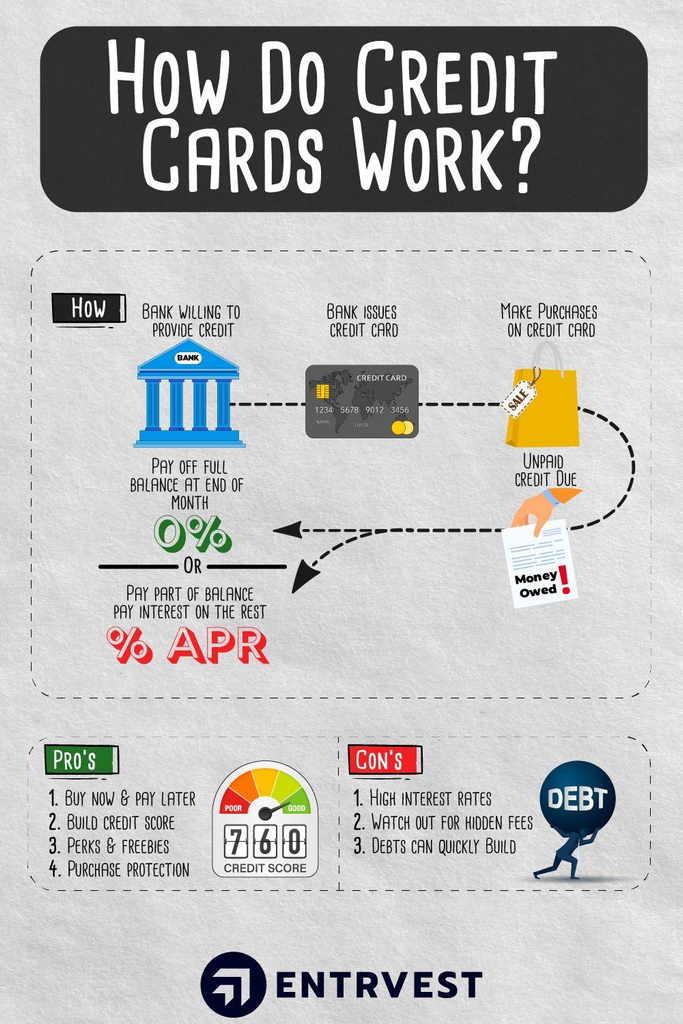
What a Credit Card Actually Is
A credit card is a line of credit issued by a bank or financial institution that allows you to borrow money, up to a set limit, to make purchases. Unlike a debit card, which pulls money directly from your bank account, a credit card allows you to pay for something now and repay the card issuer later.
This distinction matters because it means every credit card purchase is technically a small loan. The card issuer covers the cost of your purchase at the time of the transaction, and you’re responsible for repaying that amount, either in full or over time, according to the terms of your card agreement.
How the Credit Limit Works
When you’re approved for a credit card, the issuer assigns you a credit limit, the maximum amount you’re allowed to carry on the card at any given time. This limit is determined based on factors like your income, existing debt, and credit history.
Your credit limit isn’t necessarily how much you should spend each month, it’s simply the maximum the issuer will allow. Using a large portion of your available limit can affect your credit score (more on this later), so many financial experts suggest keeping your balance well below your total limit, even if you plan to pay it off in full each month.
The Billing Cycle Explained
Every credit card operates on a recurring billing cycle, typically around 28 to 31 days long. During this period, all your purchases, along with any interest or fees, accumulate into a running balance. At the end of the billing cycle, the issuer generates a statement summarizing:
All transactions made during the cycle
Your total balance
The minimum payment due
The payment due date, typically about three weeks after the statement closes
Understanding your specific billing cycle dates helps you track spending and plan payments, particularly if you’re trying to time large purchases around when your statement closes.
The Grace Period and How It Affects Interest
Most credit cards include a grace period, the time between the end of your billing cycle and your payment due date, during which you can pay your full statement balance without accruing interest on new purchases. This is the mechanism that allows people who pay their balance in full each month to use a credit card without ever paying interest.
However, this grace period generally only applies if you pay your full statement balance by the due date. If you carry a balance from a previous cycle into a new one, most cards begin charging interest immediately on new purchases as well, since the grace period typically only applies when the previous balance was paid in full.
How Interest (APR) Works
If you don’t pay your full balance by the due date, the remaining amount begins accruing interest, calculated using the card’s Annual Percentage Rate, or APR. Despite being expressed as an annual rate, interest is typically calculated and applied daily, using a method most issuers describe as the “daily periodic rate.”
Here’s a simplified breakdown of how that generally works:
- The issuer divides your APR by 365 to calculate a daily periodic rate.
- Each day, that daily rate is applied to your outstanding balance to calculate that day’s interest charge.
- These daily interest charges accumulate throughout the billing cycle and are added to your total balance.
This is why carrying a balance can become expensive relatively quickly, especially on cards with higher APRs, since interest compounds daily rather than being calculated as a single flat annual charge.
Variable vs. Fixed APR
Most credit cards today carry a variable APR, meaning the rate can change over time, typically tied to a benchmark rate like the U.S. prime rate. When that benchmark rate moves, your card’s APR may move with it. Fixed-rate cards, which keep the same APR regardless of broader interest rate changes, have become less common but still exist with certain issuers.
Minimum Payments: What They Are and Why They’re Risky
Every statement lists a minimum payment, the smallest amount you’re required to pay to keep your account in good standing and avoid a late fee. Minimum payments are typically calculated as either a small percentage of your balance (often 1% to 3%) or a flat dollar amount, whichever is greater.
While paying only the minimum keeps your account current, it’s generally an expensive way to carry debt. Because interest continues accruing on the remaining balance, paying only the minimum can significantly extend the time it takes to pay off a balance and substantially increase the total interest paid over time. Paying more than the minimum, or ideally the full statement balance, reduces or eliminates this extra cost.
How Credit Card Payments Are Applied
When you make a payment, federal regulations generally require issuers to apply amounts above the minimum payment to the balance with the highest APR first, if your account carries multiple balances at different rates (for example, a purchase balance and a balance transfer balance with different promotional rates). Understanding this can help you anticipate how a partial payment will actually be allocated across different balances on your account.
Fees Beyond Interest
Beyond interest charges, credit cards can carry several other types of fees, which vary by issuer and card:
Annual fee – a recurring cost for holding the card, charged whether or not you use it.
Late payment fee – charged if you miss the payment due date.
Foreign transaction fee – charged on purchases made in a foreign currency or processed outside your home country.
Cash advance fee – charged when you use your credit card to withdraw cash, often alongside a higher APR that applies specifically to cash advances.
Balance transfer fee – a one-time fee, often a percentage of the amount transferred, charged when moving a balance from one card to another.
Over-limit fee – less common today due to regulatory changes, but some cards may still charge this if you exceed your credit limit and have opted in to allow such transactions.
Reading your card’s terms and conditions, sometimes called the “Schumer box” in the U.S. for the standardized fee disclosure table required by regulation, is the most reliable way to understand exactly which fees apply to your specific card.
How Credit Cards Affect Your Credit Score
Responsible credit card use is one of the most common ways people build a credit history, but the relationship between card use and your credit score depends on several factors.
Payment History
Your track record of paying at least the minimum payment on time is typically the single largest factor in most credit scoring models. Consistently on-time payments build a positive history, while missed or late payments can significantly lower your score.
Credit Utilization
This refers to the percentage of your total available credit that you’re currently using. For example, if you have a $5,000 limit and a $1,000 balance, your utilization is 20%. Lower utilization is generally viewed favorably by credit scoring models, and many experts suggest keeping utilization well below 30% of your total available credit, even if you plan to pay the balance in full.
Length of Credit History
The age of your credit accounts, including your oldest account and the average age of all your accounts, contributes to your credit profile. This is one reason financial experts often caution against closing old credit cards unnecessarily, since doing so can shorten your average account age.
Credit Mix and New Credit
Having a mix of different credit types (credit cards, loans, etc.) can play a modest role in your score, and opening several new accounts in a short period can temporarily lower your score due to the associated hard inquiries and reduced average account age.
How Rewards Programs Work Behind the Scenes
Many credit cards offer rewards, cash back, points, or miles, funded in part by the interchange fees merchants pay to accept card payments, along with revenue from interest and other fees. This is why rewards cards can offer meaningful value to cardholders who pay their balance in full each month: the issuer earns revenue from the merchant side and other cardholders’ interest payments, which subsidizes the rewards for cardholders who avoid interest charges entirely.
Secured vs. Unsecured Credit Cards
Most credit cards are unsecured, meaning they don’t require collateral, your approval is based on your creditworthiness alone. Secured credit cards, often used for building or rebuilding credit, require a cash deposit that typically becomes your credit limit. This deposit reduces the risk to the issuer, making secured cards more accessible to applicants with limited or damaged credit history. Many secured cards report to the major credit bureaus just like unsecured cards, allowing responsible use to help build credit over time.
What Happens If You Don’t Pay
If a payment is missed, most cards charge a late fee, and the missed payment may be reported to the credit bureaus, generally once it’s more than 30 days past due, which can meaningfully impact your credit score. Some cards also apply a penalty APR, a significantly higher interest rate, if a payment is missed, which can apply to your existing balance and sometimes future purchases as well, depending on the card’s specific terms.
Continued non-payment can eventually lead to the account being closed by the issuer, sent to collections, or, in more severe and prolonged cases, resulting in legal action to recover the debt. This is why understanding your repayment obligations before carrying a balance is an important part of using a credit card responsibly.
A Simple Summary of the Credit Card Cycle
To bring these pieces together, here’s the basic cycle of how a credit card works in practice:
You make a purchase using your card, which is essentially a short-term loan from the issuer.
That purchase, along with any others, accumulates on your statement during the billing cycle.
At the end of the cycle, you receive a statement listing your balance and minimum payment.
If you pay the full balance by the due date, you avoid interest entirely, thanks to the grace period.
If you pay less than the full balance, interest begins accruing daily on the remaining amount.
Your payment history and balance relative to your credit limit are reported to the credit bureaus, influencing your credit score over time.
Frequently Asked Questions
Is it bad to carry a small balance on purpose to help my credit score? No, this is a common misconception. Paying your statement balance in full each month doesn’t hurt your credit score, and it also allows you to avoid interest charges entirely. Your credit utilization is generally based on the balance reported to the credit bureaus, not on whether you carry interest-bearing debt.
Why did my APR increase without me applying for a new card? If you have a variable APR, your rate can change when the underlying benchmark rate changes. Additionally, a missed payment can sometimes trigger a penalty APR, depending on your card’s specific terms.
Does closing a credit card hurt my credit score? It can, particularly if it’s one of your older accounts or significantly reduces your total available credit, which can raise your overall utilization percentage. The impact varies depending on your overall credit profile.
What’s the difference between a credit card and a charge card? A charge card, offered by a smaller number of issuers, generally requires the full balance to be paid off each month and typically doesn’t have a preset spending limit in the same way a traditional credit card does. Traditional credit cards allow you to carry a balance over time, subject to interest.
How quickly can responsible credit card use improve my credit score? This varies significantly based on your starting credit profile, but consistent on-time payments and low credit utilization generally begin showing positive effects within a few months, with more substantial improvement over a longer period of consistent, responsible use.
Final Thoughts
At its core, a credit card is a tool for short-term borrowing, and understanding the mechanics behind it, billing cycles, grace periods, interest calculations, and how your usage affects your credit score, makes it far easier to use one to your advantage rather than accumulating unexpected costs. Paying your full statement balance whenever possible remains the simplest way to enjoy the convenience and potential rewards of a credit card while avoiding the interest charges that can make carrying a balance expensive over time.
This article is intended for general informational purposes only and does not constitute financial advice. Credit card terms, fees, and reporting practices vary by issuer and are subject to change. Always review the current terms directly from the credit card issuer, and consult a qualified financial professional for guidance specific to your situation.